



IDO2
IDO2 (indoleamine 2,3-dioxygenase 2) is a heme-containing enzyme involved in the initial and rate-limiting step of tryptophan catabolism through the kynurenine pathway, linking amino acid metabolism to immune regulation[1][2]. Mechanistically, IDO2 contributes to immunomodulatory processes associated with kynurenine pathway activity and has been implicated in the regulation of adaptive immune responses and immune tolerance[2][3]. In disease models, IDO2 has been associated with inflammatory and autoimmune phenotypes, where genetic deletion or functional inhibition alters autoantigen-driven immune responses, particularly in models of rheumatoid arthritis and inflammatory autoimmunity[2][4]. Compared with the closely related isoform IDO1, IDO2 displays a more restricted expression pattern, being detected primarily in antigen-presenting cells, liver, kidney, brain, and placenta, and exhibits distinct enzymatic and immunological functions rather than serving as a redundant paralog[2][3]. Experimental evidence further indicates that IDO2 can regulate inflammatory responses through mechanisms involving B-cell-mediated immune activation and T-cell help, distinguishing its role from the broadly immunosuppressive activities commonly attributed to IDO1[4][3]. For research applications, D-1-methyl-tryptophan (D-1MT, indoximod) was identified as a preferred biochemical inhibitor of IDO2, and the development of selective IDO2 inhibitors has enabled more precise investigation of IDO2-dependent pathways in autoimmunity, immune tolerance, and cancer-associated immune regulation[5][6].
References:
- [1]. IDO2 gene information from NCBI.
- [2]. Prendergast GC, et al. IDO2 in Immunomodulation and Autoimmune Disease. Front Immunol. 2014 Nov 20;5:585. [Content Brief]
- [3]. Peter EK, et al. A Hybrid Hamiltonian for the Accelerated Sampling along Experimental Restraints. Int J Mol Sci. 2019 Jan 16;20(2):370. [Content Brief]
- [4]. Doria A, et al. From old concerns to new advances and personalized medicine in lupus: The end of the tunnel is approaching. J Autoimmun. 2016 Nov;74:1-5. [Content Brief]
- [5]. He G, et al. Discovery of the First Selective IDO2 Inhibitor As Novel Immunotherapeutic Avenues for Rheumatoid Arthritis. J Med Chem. 2022 Nov 10;65(21):14348-14365. [Content Brief]
- [6]. Moon YW, et al. Targeting the indoleamine 2,3-dioxygenase pathway in cancer. J Immunother Cancer. 2015 Dec 15;3:51. [Content Brief]
All Product Categories
-
IDO2 Related Products (5)
Related Products (5)

-
GNF-PF-3777
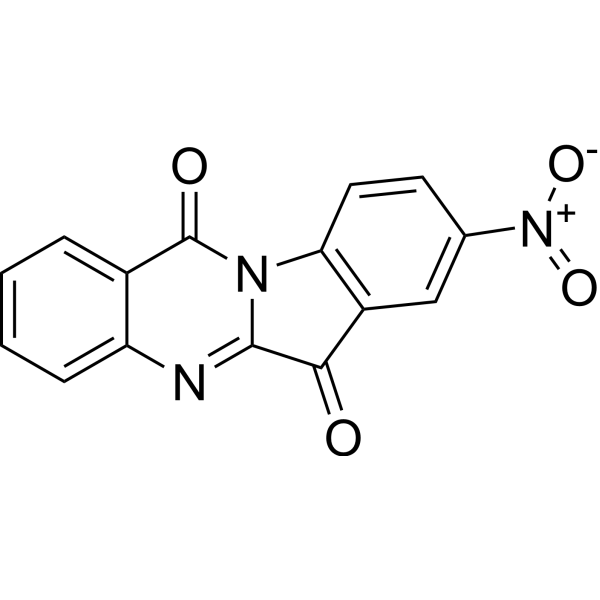 0 ImagesSynonyms: 8-NitrotryptanthrinGNF-PF-3777 (8-Nitrotryptanthrin) is a potent human indoleamine 2,3-dioxygenase 2 (hIDO2) inhibitor which significantly reduces IDO2 activity with Ki of 0.97 μM.
-
IDO2-IN-1
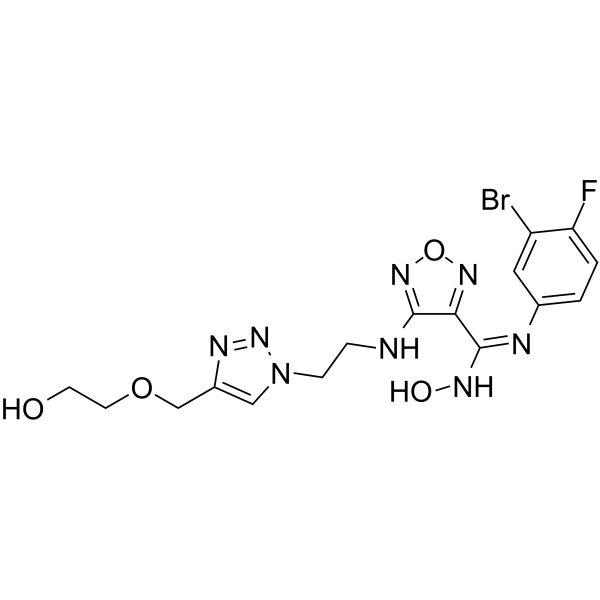
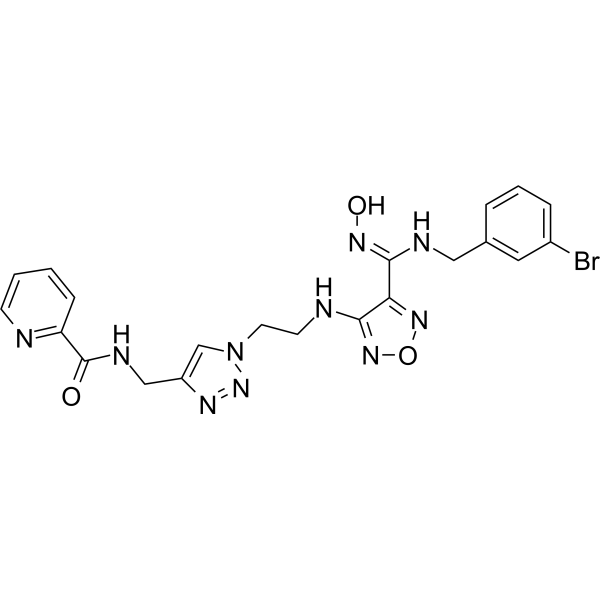 0 ImagesIDO2-IN-1 is an orally active and potent Indoleamine 2,3-dioxygenase 2 (IDO2) inhibitor with an IC50 value of 112 nM. IDO2-IN-1 can be used for inflammatory autoimmunity research.
-
Amg-1
 0 ImagesCat. No.: HY-112867CAS No.: 496023-55-3Amg-1 is a potent, reversible and selective indoleamine 2,3-dioxygenase (IDO1) inhibitor (IC50 = 3.0 μM). Amg-1 exhibits >80-fold selectivity over IDO2 (IC50 > 250 μM) and >20-fold selective over TDO (IC50 > 62.5 μM). Amg-1 can be used for cancer, hypotension, and neurological disorders research.
-
8-F-2-(Me-Pip-Me)-Tryptanthrin
 0 ImagesCat. No.: HY-184078CAS No.: 1563106-65-98-F-2-(Me-Pip-Me)-Tryptanthrin is a tryptanthrin derivative with blood-brain barrier penetration. 8-F-2-(Me-Pip-Me)-Tryptanthrin protects neurons from Aβ-induced apoptosis, inhibits Aβ-induced Tau protein hyperphosphorylation and neuronal synaptic damage, and improves learning and memory abilities in Alzheimer's disease mice. 8-F-2-(Me-Pip-Me)-Tryptanthrin can be used for the research of nervous system diseases, including diseases related to abnormal Tau protein phosphorylation and abnormal PSD-95 function.



